Twisted graphene heterostructures detect temperature with 99% accuracy, reduce thermal image errors by 46%, and execute logic operations, mimicking how biological skin senses heat.
(Nanowerk Spotlight) The human eye remains an engineering marvel that artificial systems struggle to match. Nature’s solution to vision involves not just capturing light but processing visual information directly at the sensory layer, a trick that dramatically reduces the workload on the brain. Electronic image sensors, by contrast, typically separate sensing from computing, creating bottlenecks in data transmission and energy consumption.
This limitation becomes particularly acute when dealing with infrared and thermal imaging, where traditional semiconductor materials with large bandgaps cannot easily detect long-wavelength radiation.
Graphene has tantalized researchers as a potential solution. Its high electron mobility, exceeding 10,000 cm² V⁻¹ s⁻¹ at room temperature, and ability to interact with light across a broad spectrum make it theoretically ideal for imaging applications.
Graphene also boasts a high Seebeck coefficient of approximately 60 μV K⁻¹ and exceptional thermal conductivity of 5300 W mK⁻¹, meaning it responds strongly to temperature differences. Yet graphene’s lack of a bandgap creates a fundamental problem: when light generates electrical charge carriers, these carriers rapidly recombine before they can produce a useful signal.
Various workarounds have emerged. Researchers have paired graphene with quantum dots, created specialized junction structures, and layered it with mercury cadmium telluride. None have solved the problem of sensitive, long-wavelength thermal detection combined with intelligent processing at the sensor itself.
A separate line of research has revealed surprising possibilities. When layers of atomically thin crystals stack at precise angles, their overlapping atomic lattices create moiré patterns. These interference structures, similar to the shimmering effects seen when two window screens overlap at an angle, profoundly alter electronic behavior.
A key insight driving current work is that electron-phonon interaction, how electrons couple with atomic vibrations in the crystal lattice, depends sensitively on the stacking geometry between layers.
A study now published in the journal Advanced Materials (“Twisting van der Waals Heterostructures Enables Thermographic In‐Sensor Computing and Logics”) exploits this twist-angle dependence to create a thermal sensing array inspired by the thermoreceptors embedded in human skin. The research team constructed heterostructures by placing monolayer graphene on few-layer titanium diselenide (TiSe₂) flakes at controlled twist angles. TiSe₂ serves as an ideal partner because it conducts electricity like graphene and possesses diverse vibrational modes that can interact strongly with adjacent layers.
Conceptual design of twisted thermoreceptor arrays. a) The biologicalmechanism of the human body’s thermoreceptors. Step 1: The sensation of temperature is mainly received from temperature receptors in the skin. Step 2: Temperature information is transmitted through neuronal cells via bioelectric signals. Step 3: The signal is processed and analyzed by the central nervous system to form a topological perception of temperature. b) Theoretical mechanism of twisted thermoreceptor array. The upper left inset illustrates the van der Waals heterostructure with a varied twist angle. The lower graph depicts the evolution of interlayer spacing as a function of twist angle, thereby generating 𝜃-dependent electron-phonon coupling (upper, right). c) Schematic illustration of the intelligent thermoperception system. Module (1): high precision thermographic imaging, with a schematic architecture (left), non-monotonically evolving heterostructure phonon energy (middle), and palm thermal imaging (right). Module (2): thermal image computing module, with a sketched module structure (left), the conductance of different angle thermoreceptor (middle), and the convolutional neural network architecture for image accuracy enhancement (right). Module (3): logic operation based on thermoelectric sensor array, with a conceptually schematic (left), the four cases of OR gate output current (middle), and a representative AND-OR gate logic unit (right). (Image: Reproduced with permission from Wiley-VCH Verlag) (click on image to enlarge)
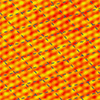
Using scanning tunneling microscopy, the researchers measured what physicists call the phonon gap. When electrons in graphene scatter from out-of-plane atomic vibrations, they require a minimum energy to do so. This threshold appears as a dip in the electronic density of states. In pristine graphene, this gap measures approximately 126 meV. When graphene sits on TiSe₂, the gap shrinks, and the amount of shrinkage depends critically on the twist angle.
The phonon gap exhibits a non-monotonic variation with twist angle. At 0°, the gap measures 112 ± 7 meV. It remains comparable at 114 ± 13 meV at 1°, before plunging to a minimum of 67 ± 6 meV at 7°, then rises to 100 ± 4 meV at 18°. This pattern reflects fundamental changes in how strongly graphene electrons interact with the combined vibrations of both layers.
The researchers traced this behavior to what they term a pseudo-commensurate phase. They developed a Registry Index that measures geometric overlap between atoms in the two mismatched lattices. The materials have a large lattice mismatch of 43.9%, with graphene’s lattice constant at 0.246 nm and TiSe₂ at 0.354 nm. At 7°, the atoms achieve minimal direct overlap, corresponding to the lowest Registry Index.
This arrangement allows the layers to relax into closer physical proximity: the interlayer spacing at 7° measures 4.940 Å, compared to 4.957 Å at 0° and 4.951 Å at 15°. The tighter spacing strengthens interlayer coupling, suppresses out-of-plane vibrations, and shrinks the phonon gap to its minimum value.
Both graphene and TiSe₂ convert temperature differences into electrical voltage efficiently. The twist-angle-dependent electron-phonon coupling provides a tuning mechanism for this thermoelectric response. Different twist angles yield distinct electrical conductivity signatures at identical temperatures.
Calculations of the dimensionless thermoelectric figure-of-merit ZT for thermoreceptors at different twist angles show no crosstalk between individual curves, indicating that multiple thermoreceptor units can operate in parallel with enhanced accuracy.
The team designed thermoreceptor arrays containing graphene/TiSe₂ heterostructures at various twist angles. Operating across temperatures from 20 K (approximately −253 °C) to 350 K (approximately 77 °C), these arrays feed their electrical outputs into neural networks for processing.
After 3000 training iterations using reference temperature measurements, an optimized 3 × 3 receptor array achieved 99% prediction fidelity, surpassing the roughly 93% accuracy reported for conventional printed temperature sensor arrays. Using 1100 distinct 64 × 64 heatmaps, the system generated high-fidelity thermal images of test patterns representing the letters N, U, A, and A.
The varied thermoelectric responses also enable direct image enhancement. Because each twist-angle configuration produces subtly different conductivity at the same temperature, the researchers used these conductivity values as weights in a thermoperception convolution kernel. This mathematical filter processes thermal images pixel by pixel, sharpening details and reducing noise.
Applied to raw thermal images, this approach reduced mean absolute error by 44.8% and root mean square error by 46.3%. The Structural Similarity Index improved by 4.4%.
A 64 × 64 thermoreceptor array combined with an image-recognition-based convolutional neural network could classify pathological cells, distinguishing normal, cancerous, and inflamed tissue with 99% accuracy based on thermal signatures.
Beyond imaging, the thermoreceptors perform basic logic operations. A single thermoreceptor receiving combined temperature difference and voltage inputs functions as an AND gate: it produces high output only when both inputs exceed threshold values.
The researchers applied temperature differences of 0 K and 30 K combined with bias voltages of 0 V and 0.2 V. The output current difference between high and low logic states exceeds a factor of three, providing a wide noise margin for reliable switching.
Two thermoreceptors with different twist angles (1° and 7°), connected in parallel, create an OR gate that activates when either unit receives sufficient signal. Combining an OR gate with an AND gate produces hybrid logic capable of Boolean operations such as (A + B)C.
The fabrication process remains compatible with existing semiconductor manufacturing. Graphene and TiSe₂ flakes undergo exfoliation in an argon atmosphere with oxygen and water levels below 0.5 ppm, followed by transfer onto gold-coated silicon substrates at controlled angles and annealing in ultrahigh vacuum below 1 × 10⁻¹⁰ Torr.
The researchers observed that thermal annealing causes structural relaxation. Heterostructures fabricated with twist angles between 4° and 14° tend to converge toward the 7° pseudo-commensurate configuration after annealing, suggesting this state represents an energy minimum.
Calculations indicate that a similar pseudo-commensurate phase should exist in graphene paired with molybdenum disulfide at a twist angle of 1.4°, pointing to a general phenomenon in graphene and transition metal dichalcogenide combinations.
Substantial challenges remain before practical implementation. Full integration with mature silicon-based electronics requires further experimental work, and scaling the precise angular control needed for reproducible devices presents manufacturing hurdles.
This research establishes that twist-angle engineering can control thermoelectric sensing characteristics, extending its utility beyond modifying band structures and transport properties. The integration of sensing, computing, and logic within a single array architecture offers a path toward neuromorphic systems that process information where it originates. For thermal wavelengths that conventional semiconductors detect poorly, twist-engineered heterostructures present an alternative approach to machine vision.
For authors and communications departmentsclick to open
Lay summary
Prefilled posts
ORCID information
Yanpeng Liu (Nanjing University of Aeronautics and Astronautics)
, 0000-0002-5265-2735 corresponding author
Nanowerk Newsletter
Get our Nanotechnology Spotlight updates to your inbox!
Thank you!
You have successfully joined our subscriber list.
Become a Spotlight guest author! Join our large and growing group of guest contributors. Have you just published a scientific paper or have other exciting developments to share with the nanotechnology community? Here is how to publish on nanowerk.com.