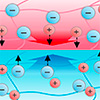
A solid-state ionic bilayer generates stable electricity for over 60 hours through spontaneous ion migration alone, eliminating the need for mechanical, thermal, or environmental triggers.
(Nanowerk Spotlight) The search for reliable, self-sustaining power sources has intensified as wearable electronics, medical sensors, and distributed Internet of Things networks proliferate. These devices often operate in environments where replacing batteries is impractical or impossible. Consider a glucose monitor embedded under the skin, an environmental sensor deployed in a remote forest, or a smart textile woven into clothing.
Traditional batteries eventually die. Wired power is often unfeasible. And while energy harvesters that scavenge power from the environment offer an appealing alternative, most fall short of the reliability these applications demand.
Existing energy-harvesting technologies typically rely on external stimuli to generate electricity. Thermoelectric generators need temperature differences. Piezoelectric systems require mechanical stress or vibration. Triboelectric devices depend on friction from repeated physical contact. Moisture-enabled generators work only in humid conditions or require continuous water supply.
Each approach produces useful power under its optimal conditions, but those conditions rarely persist in real-world settings. Temperature gradients dissipate. Mechanical motion stops. Humidity fluctuates. The result is intermittent, unpredictable power output that undermines the very autonomy these harvesters are meant to provide.
Nature, however, offers an instructive alternative. Electric rays, marine creatures capable of delivering powerful electrical discharges, generate electricity through thousands of stacked cells called electrocytes. These biological batteries exploit directional ion transport across specialized membranes, building voltage through cumulative addition rather than depending on external energy inputs.
Researchers have attempted to mimic this architecture using hydrogel-based systems that establish ion concentration gradients, but these efforts have faced persistent challenges. Thin gels lose output quickly due to limited ion capacity, while thicker versions become bulky and difficult to integrate into compact devices. Hydrogel systems also depend on maintaining hydration, making them mechanically fragile and environmentally sensitive.
A research team from Ulsan National Institute of Science and Technology in South Korea has now developed an all-solid-state energy generator that overcomes these limitations. Published in Advanced Energy Materials (“A Bioinspired Ionic Heterojunction Generator Enabling Stimulus‐Free, Scalable Energy Harvesting”), the work presents what the researchers call a Bilayer Ionic Asymmetric Stack, or BIAS. This device generates stable direct current without requiring any external mechanical, thermal, or moisture input.
All-polymer bilayer ionic heterojunction generator operating independently of external energy sources. (a) Schematic illustration of the stimulus-free energy generation mechanism, where bilayer films of positively and negatively charged polymer/ionic liquid layers form an asymmetric heterojunction that generates direct current without external stimuli. (b) Surface potential values of each charged matrix, confirming the asymmetric surface potential difference between the PAA-based positive layer and the PSS-based negative layer. (c) Stepwise mechanism of voltage generation: (i) ionic asymmetric layers with opposite surface potentials, (ii) development of a built-in potential upon interfacial contact, and (iii) built-in potential drives ion drift and forms an IDL that stores charges and stabilizes the built-in potential. (d) Representative output profiles showing a stable VOC (∼0.71 V) and a transient current density (∼6 µA cm⁻²) that decays as the IDL reaches equilibrium, resulting in sustained DC voltage generation under ambient, stimulus-free conditions. (Image: Reproduced with permission from Wiley-VCH Verlag) (click on image to enlarge)
The device operates through an ionic heterojunction, a concept borrowed from semiconductor physics. Just as a semiconductor diode creates a built-in electric field at the junction between positively and negatively doped materials, the BIAS establishes a similar asymmetry using oppositely charged polymer layers.
One layer contains poly(allylamine), which carries a positive charge, while the other contains poly(4-styrenesulfonic acid), which carries a negative charge. Both polymers sit within a thermoplastic polyurethane matrix infused with an ionic liquid called [EMIM][TFSI], a salt that remains liquid at room temperature and provides mobile charge carriers. To ensure uniform mixing of these water-based polymers with the polyurethane, the researchers added compatible surfactants: cetyltrimethylammonium bromide for the positive layer and sodium dodecyl sulfate for the negative layer.
When these two layers contact each other, the surface-potential difference between them creates an interfacial electric field. This built-in potential drives spontaneous migration of mobile ions toward the junction, where they accumulate and form what the researchers term an interfacial ionic double layer.
This ion accumulation acts as the ionic analog of the depletion region in a semiconductor diode, storing charge and stabilizing the voltage output. Initial ion migration produces a transient current that gradually diminishes as the system reaches equilibrium. The result is a stable direct-current voltage that persists without any external input.
The energy derives from the electrochemical potential difference established when the oppositely charged layers are fabricated and joined, not from any violation of thermodynamics. In this sense, the device behaves like a battery in its stability, but one that exploits interfacial ion redistribution rather than conventional electrochemical reactions.
A single 0.2-mm-thick unit delivers approximately 0.71 V and achieves a maximum volumetric power density of 66.8 µW/cm³. The device sustained stable voltage generation for over 60 hours in testing, maintaining a volumetric current density exceeding 20 µA/cm³ even after 15 hours of continuous operation. The paper notes that most practical wearable systems operate at µW-level power consumption and µA-level current, meaning the BIAS output aligns with the actual demands of biosensors and wireless communication modules.
Mechanical testing showed the device can withstand tensile strains of up to 50%, with voltage output showing only minor reduction and complete recovery upon release. Units survived 3000 stretching cycles at 30% strain with negligible voltage fluctuation below 10 mV.
Environmental tests showed that the device retained approximately 71% of its initial performance even at 90% relative humidity. This represents a significant improvement over moisture-enabled generators, which typically require humidity above 80% to function optimally and exhibit highly unstable outputs below that threshold.
The team also demonstrated that the BIAS can be electrically recharged and reused through reversible ion migration. After recharging, a stacked device successfully powered a digital wristwatch under ambient conditions, confirming sustainable operation.
Inspired by electrocyte stacking in electric rays, the researchers showed that multiple BIAS units can integrate vertically to achieve linear voltage amplification. Because each unit contributes its own 0.71 V, connecting them in series produces additive voltage gains. Using this approach, stacked arrays exceeded 100 V and successfully charged capacitors to store energy.
Practical demonstrations included directly powering a calculator with a four-unit stack and illuminating a 6 W LED bulb through capacitor discharge. Because the output is inherently direct current, no rectification circuitry is required. This represents a meaningful simplification compared to piezoelectric or triboelectric systems that generate alternating current.
The research team established the generality of their approach by testing various combinations of positively and negatively charged polymers. All pairings generated measurable voltage and current, confirming that the mechanism depends on surface-potential differences rather than the specific chemistry of any particular polymer.
Density functional theory calculations and Raman spectroscopy provided insight into the molecular mechanism. The charged polymers selectively stabilize counterions, loosening the coupling between positive and negative ion pairs in the ionic liquid. This selective stabilization reinforces the built-in ionic asymmetry and supports the directional ion transport underlying the device’s operation.
The BIAS platform offers a distinct pathway for powering wearable and distributed electronics. By eliminating dependence on external stimuli while maintaining output levels comparable to existing stimulus-driven harvesters, it addresses a fundamental limitation that has constrained practical deployment of energy-harvesting technologies.
The all-solid-state construction, combined with demonstrated mechanical flexibility, humidity tolerance, and rechargeability, positions this approach as a candidate for next-generation biointegrated sensors, smart textiles, and autonomous sensor networks.
For authors and communications departmentsclick to open
Lay summary
Prefilled posts
ORCID information
Hyunhyub Ko (Ulsan National Institute of Science and Technology)
, 0000-0003-2111-6101 corresponding author
Nanowerk Newsletter
Get our Nanotechnology Spotlight updates to your inbox!
Thank you!
You have successfully joined our subscriber list.
Become a Spotlight guest author! Join our large and growing group of guest contributors. Have you just published a scientific paper or have other exciting developments to share with the nanotechnology community? Here is how to publish on nanowerk.com.