| Dec 10, 2025 |
Researchers created a 350nm-thick bioelectronic film that turns soft when wet to stick to hearts and brains without glue, revolutionizing medical monitoring.
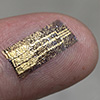
(Nanowerk News) A research team has developed a new material designed to improve the monitoring of vital organs. Scientists from the Center for Neuroscience Imaging Research (CNIR) at the Institute for Basic Science (IBS) and Sungkyunkwan University (SKKU) introduced a class of ultra-thin bioelectronics capable of interfacing with living tissue. They call the device THIN (Transformable and Imperceptible Hydrogel-Elastomer Ionic-Electronic Nanomembrane), a membrane just 350 nanometers thick (Nature Nanotechnology, “Hydrogel-elastomer-based conductive nanomembranes for soft bioelectronics”).
|
|
Biological tissues, especially the heart, brain, and muscles, are soft, curved, and constantly in motion, while most electronics remain rigid and flat. Even existing flexible devices often require glue, stitches, or rigid packaging to stay in place, creating a physical mismatch that can lead to inflammation or unstable electrical signals. The research team aimed to address this by asking: “What if a device could become soft, sticky, and shape-adapting only when it touches tissue – like magic?”
|
|
This inquiry led to the creation of THIN, a substrate-free nanomembrane engineered to be “soft when wet” and “robust when dry.” When dry, the device has a stiffness of 1.35 GPa, making it rigid enough for researchers to handle and coat easily. However, upon contact with a wet surface, it absorbs water and softens by over a million-fold to 0.035 GPa.
|
|
This transition allows it to curl spontaneously and adhere to wet tissues without sutures or external pressure, even on microscopically folded or curved surfaces. The device utilizes a dual-layer design featuring a mussel-inspired hydrogel that becomes adhesive when hydrated and a semiconducting elastomer.
|
|
Despite being mechanically imperceptible to the host tissue, the device maintains significant electrical capability. The polymer used achieves a mobility-capacitance product (µC*) of 1,034 F·cm⁻¹·V⁻¹·s⁻¹, a figure roughly 3.7 times higher than conventional stretchable materials. This performance allows organic electrochemical transistors (OECTs) built on the THIN platform to amplify biological signals with stability, even while the subject is moving.
|
|
In animal trials, the team applied THIN devices to rodent hearts, muscles, and brain surfaces. The devices adhered immediately and recorded clear signals from the heart (ECG), muscles (EMG), and brain (ECoG). They remained stable for over four weeks with no observed inflammation or tissue damage.
|
|
Because THIN amplifies signals directly at the contact site, it removes the need for bulky external amplifiers, suggesting a path toward implantable and wearable medical devices that are less invasive.
|
|
“Our THIN-OECT platform acts like a nano-skin – it is invisible to the body, mechanically imperceptible, and yet electrically powerful,” said Prof. SON Donghee, the study’s corresponding author, noting that the technology offers potential for chronic brain-machine interfaces and cardiac monitoring.
|
|
Prof. Son added that by combining transformability, self-adhesion, and ionic-electronic performance, THIN sets a standard for bioelectronics that “truly belong inside the body.” Future work will focus on wireless arrays for rehabilitation robotics and injectable versions for clinical use.
|