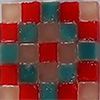
Millimeter-scale hydrogels form reversible, stimulus-responsive assemblies that encode high-density data, offering a dynamic alternative to static printed codes for adaptive information storage.
(Nanowerk Spotlight) Biological systems organize themselves with astonishing precision. Cells replicate, proteins fold, viruses assemble — all without centralized control. What enables these processes is not just the molecular machinery but the instructions that guide it. DNA, for example, encodes information through specific base-pair interactions, which in turn direct the formation of proteins, enzymes, and more.
This natural encoding system operates at nanoscale and is both dynamic and reversible. In artificial materials, scientists have worked for decades to recreate this level of complexity and control. Much progress has been made using techniques like DNA hybridization to store information in self-assembled nanoscale structures. However, building similar systems at larger scales — where materials must maintain structural integrity while also allowing for flexible reconfiguration — remains a major challenge.
Artificial self-assembly at the millimeter scale poses difficulties in both connectivity and control. Conventional 3D printed information storage systems can incorporate multiple materials and colors, but they are fixed in place after printing. Once the structure is formed, the data encoded in it cannot be changed without remanufacturing the entire object. This limitation has prompted researchers to explore reversible bonding mechanisms and dynamic assembly processes.
A promising area involves supramolecular chemistry, which focuses on interactions between molecules that are strong enough to hold structures together but weak enough to be reversible. These include hydrogen bonds, metal-ligand interactions, and electrostatic attraction between charged groups. Supramolecular materials have already shown utility in adhesives, tissue scaffolds, and responsive surfaces. Now, researchers are applying these principles to information storage.
These blocks also change color in response to specific environmental triggers — heat, light, or redox agents — enabling them to function as dynamic information carriers. The system allows data to be stored, hidden, modified, or reconfigured using simple external stimuli.
The hydrogels at the heart of the study are based on poly(hydroxyethyl methacrylate), or PHEMA. This polymer is widely used in soft materials research and can be easily shaped and modified. To give each hydrogel a specific response to an environmental condition, the researchers embedded them with one of three chromic materials.
For temperature response, they used thermochromic red powder that turns visibly red below 15°C. For redox response, they added starch, which forms a black complex when treated with iodine and reverts to white when exposed to vitamin C. For light response, they incorporated ammonium molybdate, which changes from white to green under ultraviolet light and returns to white when heated.
Stimuli-responsive behavior of BT, BI2 and BUV hydrogel systems. (a) The color and (b) L* (luminosity) changes of BT seen in different temperatures. Color changes of BI2 upon treatment with (c) iodine solution and (d) VC. (e) The correlation between the L* of the BI2 and the time upon treatment with iodine solution (green line) and VC (blue line). Color changes of BUV upon treatment with (f) 365 nm UV light and (g) 70 °C. (h) The correlation between the L* of the BUV and the time upon treatment with 365 nm UV light (green line) and 70 °C (blue line). (Image: Reprinted from DOI:10.1016/j.supmat.2025.100099, CC BY)
Each hydrogel block — referred to as BT (temperature-responsive), BI₂ (redox-responsive), or BUV (UV-responsive) — was manufactured using a simple one-pot method. No complex synthesis of specialized dyes or fluorophores was required. The result was a set of three-millimeter cubes that maintained their color-changing behavior even after repeated cycles of activation and reset. The materials were selected not just for their responsiveness but for their affordability, ease of use, and consistent performance.
The next step was to enable these hydrogels to attach and detach from each other in a controlled way. To achieve this, the researchers modified the surface of each block with charged polymers. Some were coated with positively charged groups, while others were given negatively charged ones. When two blocks with opposite charges were brought into contact, they adhered firmly via electrostatic interaction. This binding was strong enough to lift one block using the other, yet reversible with simple separation.
To quantify the strength of these interactions, the team measured the interfacial force between blocks using a microbalance system. Oppositely charged hydrogels showed binding forces exceeding 1.9 kilonewtons per square meter. In contrast, blocks with the same charge barely adhered, showing forces under 10 newtons per square meter. This confirmed that the assembly was governed by selective electrostatic attraction rather than nonspecific adhesion.
With stable bonding and reliable color responses established, the team built larger assemblies of the hydrogel blocks arranged in grids. A typical configuration was a 5 × 5 array, where each block served as a single unit of data — or “pixel.” These arrays could be scanned to retrieve encoded information based on the visible color pattern.
Importantly, the colors were not always visible. Without the appropriate stimulus, the hydrogels appeared neutral. Only under specific conditions did the data reveal itself. For instance, cooling the array would cause BT blocks to turn red. Treating it with iodine would turn BI₂ blocks black. Exposing it to UV light would activate the green color in BUV blocks.
Because each block could respond independently, and the overall grid could be assembled in countless combinations, the total number of unique codes was extremely high. Using combinatorial analysis, the team estimated that a 5 × 5 array could encode over 800 billion distinct messages. This calculation accounted for different arrangements, response states, and detection angles.
Photographs of the information code. (a) Photographs showing the reversible responsiveness of information codes under different stimuli. (b) The transformation of code G into code H by means of a cut and replace strategy. (c) Photographs showing the transformation of code G into code I by means of a reassembly strategy. (d) The information code was expanded from 5 × 5 grids (code G) to 6 × 6 grids (code J). Hydrogels were all prepared on the same substrate. The scale bar is 5 mm. (Image: Reprinted from DOI:10.1016/j.supmat.2025.100099, CC BY) (click on image to enlarge)
The system was not just high-capacity but also reconfigurable. The researchers showed that the grid could be partially disassembled and modified by replacing specific blocks. Entire arrays could also be taken apart and reassembled in a new configuration. Stimulus exposure could be applied in sequence to reveal different layers of information. For example, a neutral array might first be treated with UV light, then exposed to iodine, and finally cooled, with each step revealing a new pattern or message. Because all interactions were reversible, the system supported repeat use without loss of function.
The information encoded was decoded using image recognition software capable of detecting the color and location of each block. Only under the correct stimulus conditions could the software extract the correct data. This adds a built-in layer of confidentiality, as the message remains inaccessible unless the right environmental trigger is applied.
While the study focuses primarily on material behavior and encoding strategy, the implications for future applications are clear. Systems like this could be used in physical security tagging, where data needs to be both hidden and reconfigurable. In wearable devices, hydrogel-based codes could respond to environmental conditions and change function or display in real time. Because the blocks are inexpensive and reusable, they may also serve in educational tools or adaptive labeling systems where temporary data display is required.
Rather than proposing a single end-use, the authors emphasize the versatility of their approach. By combining simple chemistry with modular design and reversible assembly, this platform offers a general framework for building responsive material systems that can encode and transform information at the visible scale.
The work demonstrates how supramolecular strategies — when applied thoughtfully and precisely — can extend the capabilities of soft materials from static carriers to adaptable, intelligent systems.
For authors and communications departmentsclick to open
Lay summary
Prefilled posts
ORCID information
Feng Shi (Beijing University of Chemical Technology)
, 0000-0001-5897-5116 corresponding author
Nanowerk Newsletter
Get our Nanotechnology Spotlight updates to your inbox!
Thank you!
You have successfully joined our subscriber list.
Become a Spotlight guest author! Join our large and growing group of guest contributors. Have you just published a scientific paper or have other exciting developments to share with the nanotechnology community? Here is how to publish on nanowerk.com.