| Jun 09, 2026 |
A new buried growth process creates diamond NV center arrays with controlled position and orientation, supporting scalable room-temperature quantum devices.
(Nanowerk News) Researchers at Kanazawa University, in collaboration with Diamond and Carbon Applications (Germany), have developed a buried-growth process for nitrogen–vacancy (NV) centers in diamond using microwave plasma chemical vapor deposition (MPCVD).
|
|
By employing nitrogen-radical selective etching, which simultaneously enhances metal-mask durability through nitridation, the team enabled a continuous etching–growth sequence within a single MPCVD process. Optical measurements confirmed highly aligned NV centers selectively buried in predefined regions.
|
|
This integrated approach provides a stable and scalable platform for orientation-controlled diamond qubits and future room-temperature quantum technologies (Carbon, “Selective homoepitaxial growth of buried diamond films with NV centers”).
|
 |
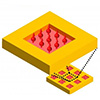
| Schematic illustration of the newly developed buried-growth process for highly aligned NV centers in diamond. (Image: Kanazawa University)
|
|
Nitrogen–vacancy (NV) centers are atomic-scale defects in diamond that act as quantum bits. Unlike many quantum systems, they remain stable at room temperature. Their quantum states can be controlled and read using light, allowing information to be stored and processed with high precision. These properties make NV centers promising components for scalable quantum technologies.
|
|
To realize quantum devices based on NV centers, precise control of interactions between individual NV centers is essential. These interactions depend strongly on both the distance between NV centers and the orientation of their crystallographic axes. Therefore, not only positional control but also deterministic alignment of NV orientation is required.
|
|
Ion implantation has long been used to create NV arrays. However, the process can disturb the diamond lattice and does not allow reliable control of NV orientation. In contrast, MPCVD remains the only growth-based approach capable of aligning NV axes while preserving high crystal quality. Despite this advantage, no technique had previously achieved simultaneous control of both NV position and orientation.
|
|
In this study, the team developed a new diamond processing and growth technique by combining a hydrogen–nitrogen plasma radical etching method with lithographically patterned Au/Ti metal masks. Because the selective etching is chemically driven by plasma-generated radicals rather than physical ion bombardment, crystal damage is minimized. During etching, the Ti mask surface becomes partially nitrided, significantly enhancing its resistance to hydrogen plasma during subsequent MPCVD growth.
|
|
By performing continuous growth without removing the sample from the chamber, the researchers achieved selective buried growth of diamond layers containing highly oriented NV centers exclusively within the etched regions.
|
 |
| (a) Optical microscopy images and fluorescence maps after buried growth of NV centers. (b) ODMR spectrum measured in the buried region, showing preferential NV alignment. (Image: Kanazawa University)
|
|
NV centers emit red fluorescence when illuminated with green light. Therefore, in samples fabricated using the developed process, only the buried regions containing NV centers are expected to glow. As shown in Fig. (a), optical microscopy and fluorescence mapping revealed strong NV-related red emission exclusively in the buried-growth regions, confirming selective formation of NV centers.
|
|
Fig. (b) presents optically detected magnetic resonance (ODMR) measurements performed on (111) diamond substrates. The spectrum exhibits a distinct four-peak structure in which the outer peaks are significantly stronger than the inner ones. This characteristic spectral pattern indicates that the NV centers formed during buried growth are preferentially aligned along a specific crystallographic orientation.
|
|
These results demonstrate that the developed process enables simultaneous control of NV position and orientation. Importantly, the method is also applicable to (100) diamond substrates, indicating that it is not restricted by crystal orientation and thus represents a versatile fabrication platform.
|
|
This technology provides a foundational platform for high-density integration and multi-qubit architectures in diamond-based quantum devices. By further refining positional control, the researchers aim to realize three-dimensional NV arrays. Such advances are expected to contribute to the development of room-temperature diamond quantum computers and scalable quantum technologies.
|